Updated
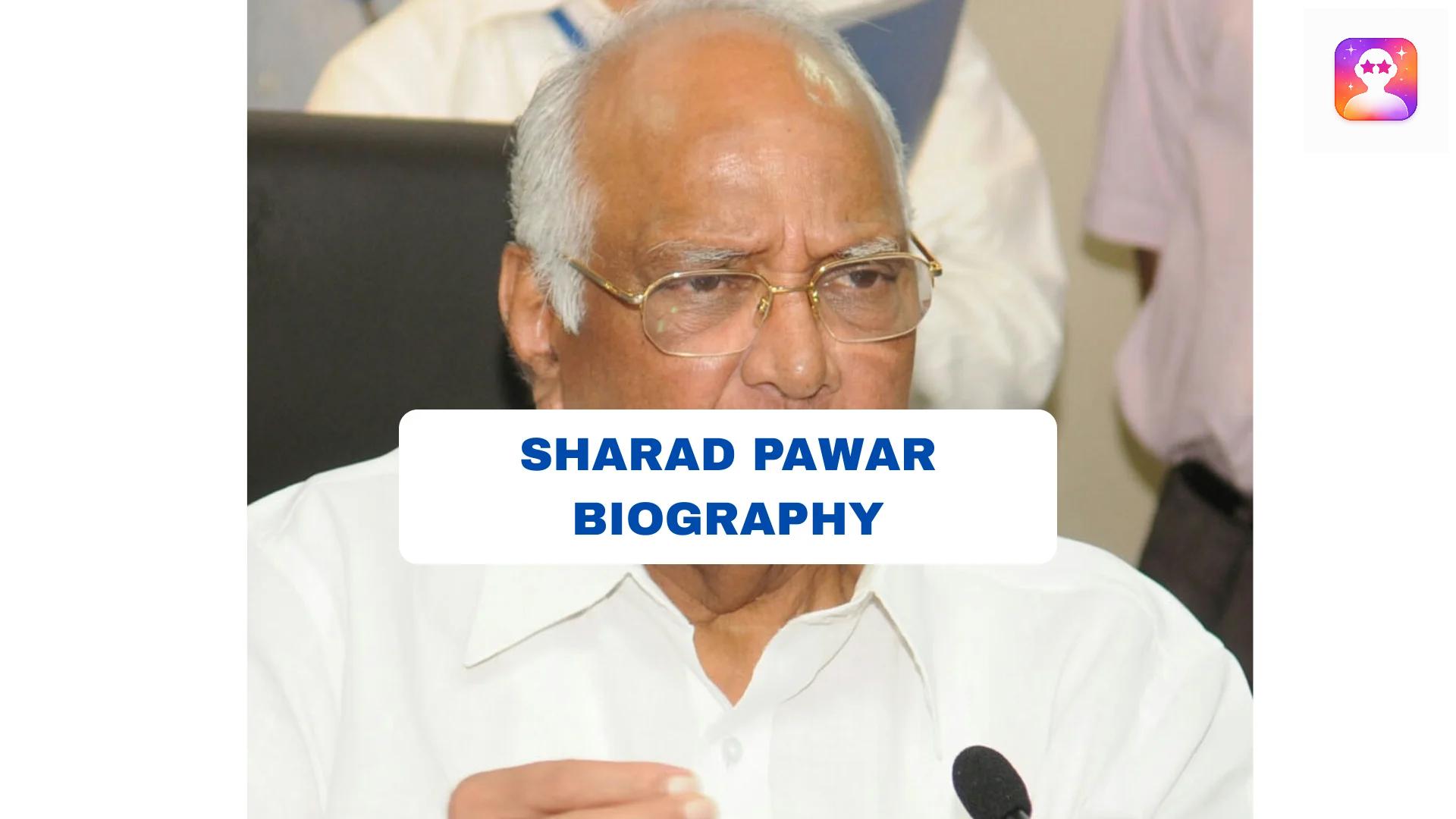
Sharad Pawar Biography: Age, Family, Net Worth, Wife & Education
Sharad Pawar Biography: Age, Family, Net Worth, Wife & Education

Sharad Pawar is one of the most enduring and influential figures in Indian politics. With a career spanning over five decades, he has played a pivotal role in shaping Maharashtra’s political landscape as well as national governance. Known for his strategic acumen, administrative experience, and grassroots connect, Pawar’s biography is a story of ambition, resilience, and adaptability. He has served India in several key capacities, including as Chief Minister of Maharashtra, Union Minister, and the founder of the Nationalist Congress Party (NCP). His political life reflects the evolution of Indian democracy, coalition politics, and regional leadership.
Born into a politically aware family, Sharad Pawar rose from student activism to become one of the youngest Chief Ministers in India’s history. Over time, he established himself as a master strategist capable of navigating complex political alliances. His leadership style blends pragmatism with ideological flexibility, enabling him to remain relevant even in rapidly changing political environments.
Early Life and Background
Sharad Pawar was born on December 12, 1940, in Baramati, a town in Pune district of Maharashtra. His family had deep roots in agriculture and rural society, which shaped his understanding of farmers’ issues and grassroots challenges. His uncle, Keshavrao Jedhe, was a prominent social reformer and freedom fighter, which exposed Pawar to political discussions and social activism from a young age.
Growing up in a rural setting gave Pawar firsthand experience of agrarian problems, water scarcity, and economic inequality. These early experiences later influenced his policies and priorities, especially in the agricultural sector.
He completed his early education in Maharashtra and later pursued higher studies in Pune. Even as a student, Pawar showed strong leadership qualities and an inclination toward public life. He actively participated in student politics and gradually built a reputation as a determined and articulate leader.
Entry into Politics
Sharad Pawar entered active politics at a young age. In 1967, at just 27 years old, he was elected to the Maharashtra Legislative Assembly. This marked the beginning of a political journey that would span more than half a century.
His early years in politics were shaped by the socio-political transformations of post-independence India. Pawar quickly distinguished himself through his organizational skills and ability to connect with both rural and urban voters. He became known as a leader who could bridge traditional political values with modern governance approaches.
Becoming the Youngest Chief Minister
One of the most remarkable milestones in Sharad Pawar’s biography is his appointment as the Chief Minister of Maharashtra in 1978. At the age of 38, he became one of the youngest Chief Ministers in India. This achievement brought him national recognition and established him as a rising star in Indian politics.
During his tenure, Pawar focused on agricultural development, irrigation projects, rural infrastructure, and industrial growth. His leadership helped strengthen Maharashtra’s position as one of India’s most economically advanced states.
He later served as Chief Minister multiple times, each tenure reinforcing his reputation as a capable administrator and a leader with a deep understanding of Maharashtra’s socio-economic fabric.
Role in National Politics
Sharad Pawar’s influence extended far beyond Maharashtra. He played a significant role in national politics, especially during the era of coalition governments. He served as the Union Minister for Defence and later as the Union Minister for Agriculture.
As Defence Minister, Pawar contributed to strengthening India’s defense preparedness and policy planning. However, it was his role as Agriculture Minister that earned him widespread recognition. He was instrumental in shaping agricultural policies aimed at improving farmers’ income, food security, and rural development.
His tenure saw efforts to modernize agriculture, promote technological innovation, and expand irrigation infrastructure. Though challenges persisted, his focus on the farming community reflected his rural upbringing and long-standing commitment to agrarian welfare.
Founder of the Nationalist Congress Party (NCP)
In 1999, Sharad Pawar founded the Nationalist Congress Party (NCP) after separating from the Indian National Congress. This move marked a turning point in his political career. The NCP quickly emerged as a major political force in Maharashtra and became an important player in national coalition politics.
The formation of the NCP demonstrated Pawar’s independent political vision and his ability to build a new party structure from the ground up. Under his leadership, the party participated in several state and national governments, often playing the role of kingmaker in coalition formations.
Master of Coalition Politics
Sharad Pawar is widely regarded as a master strategist in coalition politics. His ability to negotiate alliances, manage diverse political interests, and maintain stability in complex political scenarios has earned him respect across party lines.
In Maharashtra, he played a crucial role in forming and sustaining coalition governments that balanced regional aspirations with national political realities. His pragmatic approach allowed him to work with leaders of different ideologies and backgrounds.
This talent for coalition-building is one of the defining features of Sharad Pawar’s political biography.
Contributions to Indian Cricket and Sports
Apart from politics, Sharad Pawar made significant contributions to Indian cricket administration. He served as the President of the Board of Control for Cricket in India (BCCI) and later as the President of the International Cricket Council (ICC).
Under his leadership, Indian cricket expanded its global influence and financial strength. He was instrumental in promoting major international tournaments and strengthening India’s position in global cricket governance.
His involvement in sports administration showcased his versatility and leadership beyond traditional political spheres.
Major Achievements
Sharad Pawar’s achievements span multiple sectors:
- Youngest Chief Minister of Maharashtra
- Founder of the Nationalist Congress Party
- Union Minister for Defence and Agriculture
- Architect of several irrigation and agricultural development initiatives
- Key figure in strengthening coalition politics in India
- Influential leader in global cricket administration
These accomplishments underline his ability to adapt, lead, and influence both governance and institutional development.
Controversies and Criticism
Like any long-serving political figure, Sharad Pawar has faced controversies and criticism. His policies, alliances, and political decisions have often been debated. Critics have accused him of opportunistic politics and excessive pragmatism. Others have questioned the effectiveness of certain agricultural policies during his tenure as Agriculture Minister.
However, supporters argue that his flexibility and strategic thinking were necessary for political stability and effective governance in a diverse democracy like India.
Controversies have not diminished his relevance. Instead, they highlight the complexity and challenges of leading in a multi-party democratic system.
Personal Life
Despite his public stature, Sharad Pawar has maintained a relatively private personal life. He is known to be deeply connected to his roots in Baramati and often emphasizes the importance of rural development.
His family has also been active in politics, continuing his legacy and influence in Maharashtra. However, Pawar remains the central figure whose experience and guidance shape political strategies.
FAQs
Who is Sharad Pawar?
Sharad Pawar is a veteran Indian politician, former Chief Minister of Maharashtra, Union Minister, and founder of the Nationalist Congress Party.
When was Sharad Pawar born?
He was born on December 12, 1940, in Baramati, Maharashtra.
What is Sharad Pawar famous for?
He is famous for his long political career, strategic leadership, coalition-building skills, and contributions to agriculture and Indian cricket.
Which party did Sharad Pawar found?
He founded the Nationalist Congress Party (NCP) in 1999.
What roles did Sharad Pawar serve at the national level?
He served as Union Minister for Defence and Union Minister for Agriculture.
How did Sharad Pawar contribute to Indian cricket?
He served as President of the BCCI and ICC, strengthening India’s influence in global cricket administration.
Why is Sharad Pawar considered a master strategist?
Because of his ability to build coalitions, manage political diversity, and remain influential across changing political landscapes.
Conclusion
Sharad Pawar’s biography stands as a testament to endurance, leadership, and strategic brilliance in Indian politics. From his early days in Baramati to becoming one of the most respected power brokers in the country, his journey reflects the changing face of Indian democracy. He has successfully combined regional leadership with national influence, administrative experience with political foresight, and tradition with modern governance.
Whether admired or criticized, Sharad Pawar remains an indispensable chapter in India’s political narrative. His life story is not just a biography but a lesson in adaptability, resilience, and the art of leadership in a complex democratic system
Written by: SchoolScholar



People Also Profiled
Based on profession, era, and public relevance